Why Every App Blocker Failed You — And What the Science Says Actually Works for ADHD Brains
Decades of research suggest the problem was never your willpower. It was a tool built for the wrong kind of brain.
If you have ADHD and a smartphone, you are not fighting a bad habit. You are fighting a neurological mismatch that no amount of willpower was ever going to fix.
Let’s start with what the research actually shows.
The ADHD brain, as Dr. Russell Barkley has spent four decades documenting, is not a lazy brain or an unmotivated brain. It is a brain with a fundamentally different relationship to dopamine. Baseline dopamine levels run lower. The executive function system — the part responsible for inhibiting impulsive responses, sustaining attention, and choosing long-term reward over immediate gratification — operates differently than in a neurotypical brain.
This is not a character flaw. It is neurophysiology.
Now consider what a smartphone is. Nir Eyal, in Hooked, describes the engineering philosophy behind every major social media platform: variable reward schedules, frictionless access, infinite scroll. These are not accidents. They are the deliberate application of behavioural psychology — specifically, the same mechanics that make slot machines compulsive — applied to software used by four billion people.
The ADHD brain and the modern smartphone are, in a precise neurological sense, a perfect storm.
Why willpower was always the wrong tool
When you downloaded your first app blocker, you were using a cognitive resource — willpower — that research consistently shows is both finite and disproportionately taxed in ADHD.
Roy Baumeister’s work on ego depletion established that self-control draws from a limited pool. The more decisions, the more resistance, the more override — the faster that pool depletes. By evening, it is almost gone.
For an ADHD brain, this depletion happens faster. The constant effort of inhibiting impulsive responses throughout the day — the small acts of not checking, not opening, not scrolling — accumulates into an executive function deficit that makes the 9pm reach for the phone essentially automatic.
You were not weak. You were depleted. And then you were asking a depleted system to override an algorithmically optimised dopamine trigger.
That was never going to work.
“The tools that work on willpower-based systems don’t work on dopamine-driven ones.”

The specific failure of digital solutions
Here is the deeper problem with app blockers, screen time limits, and every other software-based solution: they live on the same device as the problem.
BJ Fogg, whose Tiny Habits framework has become foundational in behavioural science, identifies three components required for any behaviour to occur: motivation, ability, and a prompt. Remove any one of them and the behaviour stops.
Every digital blocker attempts to remove motivation — to make you not want to open Instagram. But motivation in an ADHD brain is not rational. It is dopamine-driven. You do not want to open Instagram. Your brain does. Those are not the same thing.
What none of these solutions address is ability. As long as the bypass is one tap away — as long as the “ignore for today” button exists, as long as you can delete the app, restart the phone, change the time zone — the ability to access the dopamine source remains intact.
The ADHD brain, under stress or boredom, will find that bypass. Every time. Not because you chose to. Because the executive function system that would stop you is the same system that ADHD compromises.
This is why people with ADHD report cycling through app blockers faster than neurotypical users. The research into impulsivity and response inhibition predicts exactly this.
What the science says actually works
In 2023, a peer-reviewed study published in the Proceedings of the National Academy of Sciences tested a different approach. Rather than asking users to resist the urge to open apps, it introduced a brief physical interruption — a mandatory pause before access. The result was a 57% reduction in app openings.
Fifty-seven percent. Not from education. Not from motivation. From friction.
James Clear, in Atomic Habits, articulates the principle precisely: “The greater the friction, the less likely the behaviour.” He is describing the same mechanism Fogg identifies — removing ability. But Clear goes further: the most effective friction is physical friction. Distance, objects, environment design. Things that require the body to move before the brain can act.
For an ADHD brain, this distinction is critical. Digital friction — a password, a timer, a confirmation screen — is processed by the same executive function system that is already compromised. It is asking the broken part to fix itself.
Physical friction is different. Walking to another room. Picking up an object. Tapping a device. These actions introduce a delay that is processed differently — they give the prefrontal cortex the seconds it needs to come online. They convert an automatic behaviour into a moment of choice.
Dr. Barkley calls this the “30-second rule” — research suggests that a 30-second delay between impulse and action is enough for the executive function system to engage. Physical distance creates that delay without requiring willpower to create it.
This is why environment design consistently outperforms motivation-based interventions in ADHD research. You are not asking the brain to behave differently. You are changing the environment so the brain has no choice.
The tool that applies this correctly
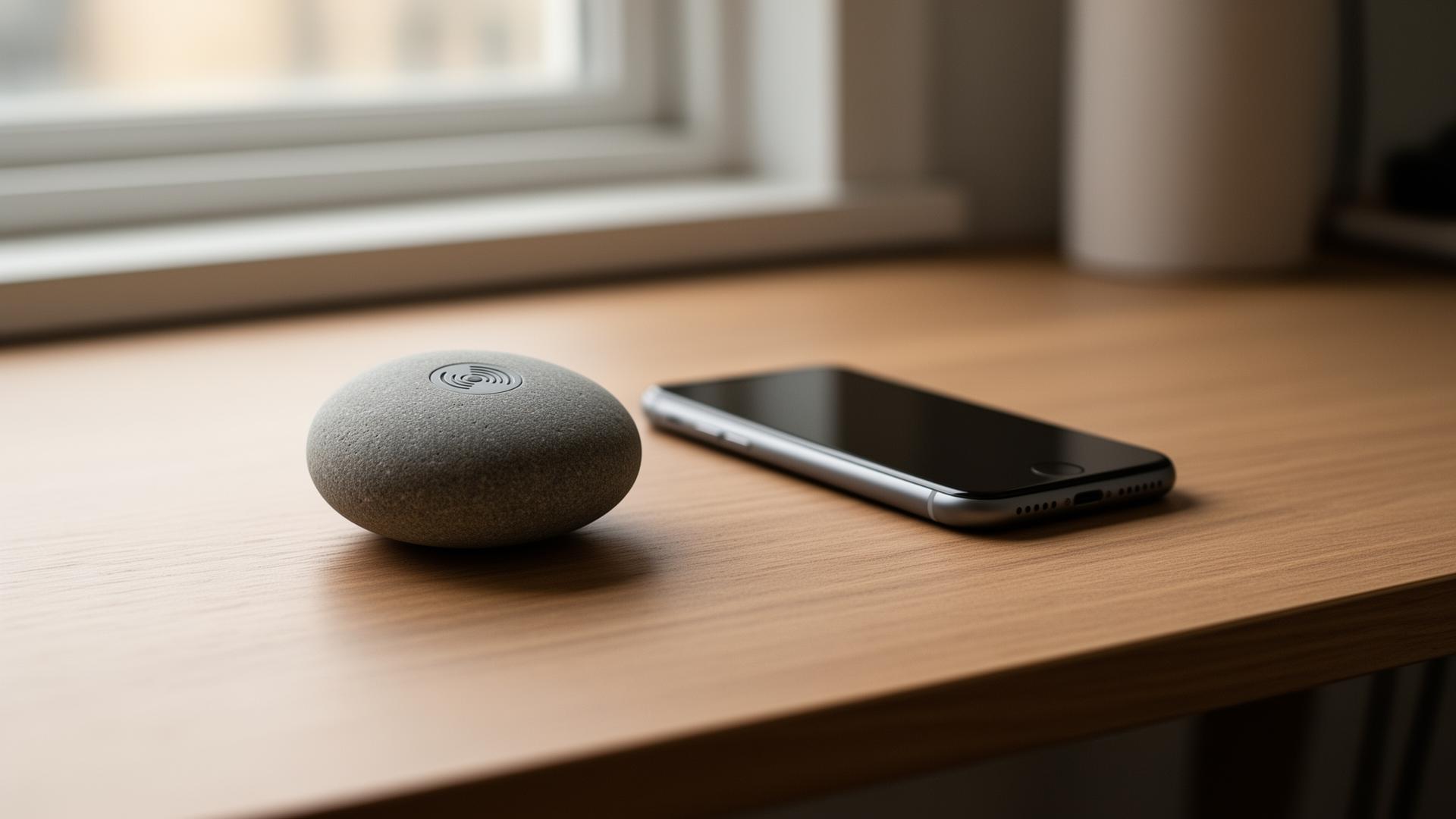
Friction is a small physical NFC device — about the size and weight of a smooth river stone — that pairs with a free app on your iPhone or Android.
The setup takes minutes. You choose which apps and websites to block. You create modes for different moments — deep work, evenings, family time. Each mode has its own set of blocked apps. Then you place the device wherever your phone addiction is worst: your desk, your bedside table, your kitchen counter.
When you tap your phone to Friction, your selected apps lock instantly. No confirmation screen. No “ignore for today” button. No bypass available.
To unlock them, you have to physically return to the device and tap again.
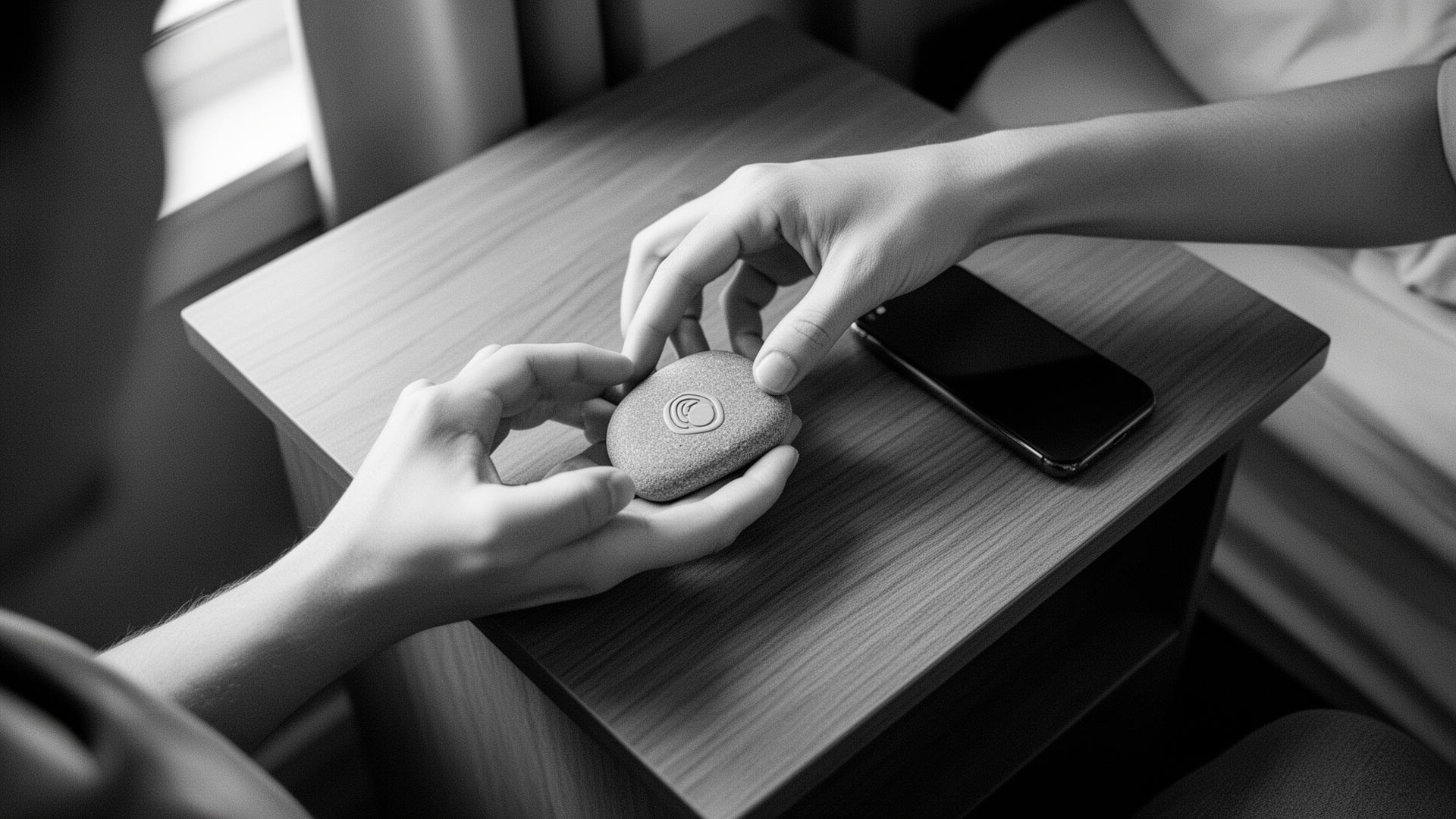
That walk — across the room, down the stairs, to the other side of the desk — is the 30-second delay the research identifies. It is not a large inconvenience. It is a precisely calibrated neurological intervention. The moment of physical action is enough for the prefrontal cortex to come online and make an actual decision rather than an automatic one.
“I used to set app limits in my phone settings. I always hit ignore. No workaround this time.”
“Finished my thesis in two weeks. First time in months I actually sat down and worked.”
These are not people with more willpower than you. They are people who finally had the right tool for how their brain actually works.
What changes
Among Friction’s 56,430+ users, the average daily time saving is 180+ minutes. Not from trying harder. From changing the environment.
For ADHD users specifically, the reported changes follow the pattern the research predicts: reduced impulsive opening, longer sustained focus sessions, and — critically — the removal of the shame cycle that comes from failing at willpower-based solutions repeatedly.
You cannot fail at a physical barrier. Either the device is there or it isn’t. Either you walked across the room or you didn’t. There is no version of this that requires you to be better than your brain.
For the ADHD brain specifically
Friction offers something no app blocker does: object permanence built into the solution.
The device sits where you can see it. It has physical weight. It occupies space. Unlike an app setting buried three menus deep, it exists in your environment as a cue — a visual reminder of your intention that doesn’t depend on you remembering your intention.
This is environment design applied to executive function. It is the solution that should have existed years ago.
Friction starts at $59 — a one-time purchase, no subscription.
Ships from Ohio. Comes with a 30-day money-back guarantee. If you don’t notice a difference in your focus and phone habits within 30 days, you get a full refund.
Current pricing includes up to 35% off
See if Friction is right for you →